
Cement vs Concrete: What Makes Them Different?
 Raleigh ProConnect
- May 6, 2025
Cement and concrete aren’t the same. Cement is a fine powder that reacts with water to bind materials together in a concrete mix. Concrete is the final mix used in sidewalks, driveways, and buildings.
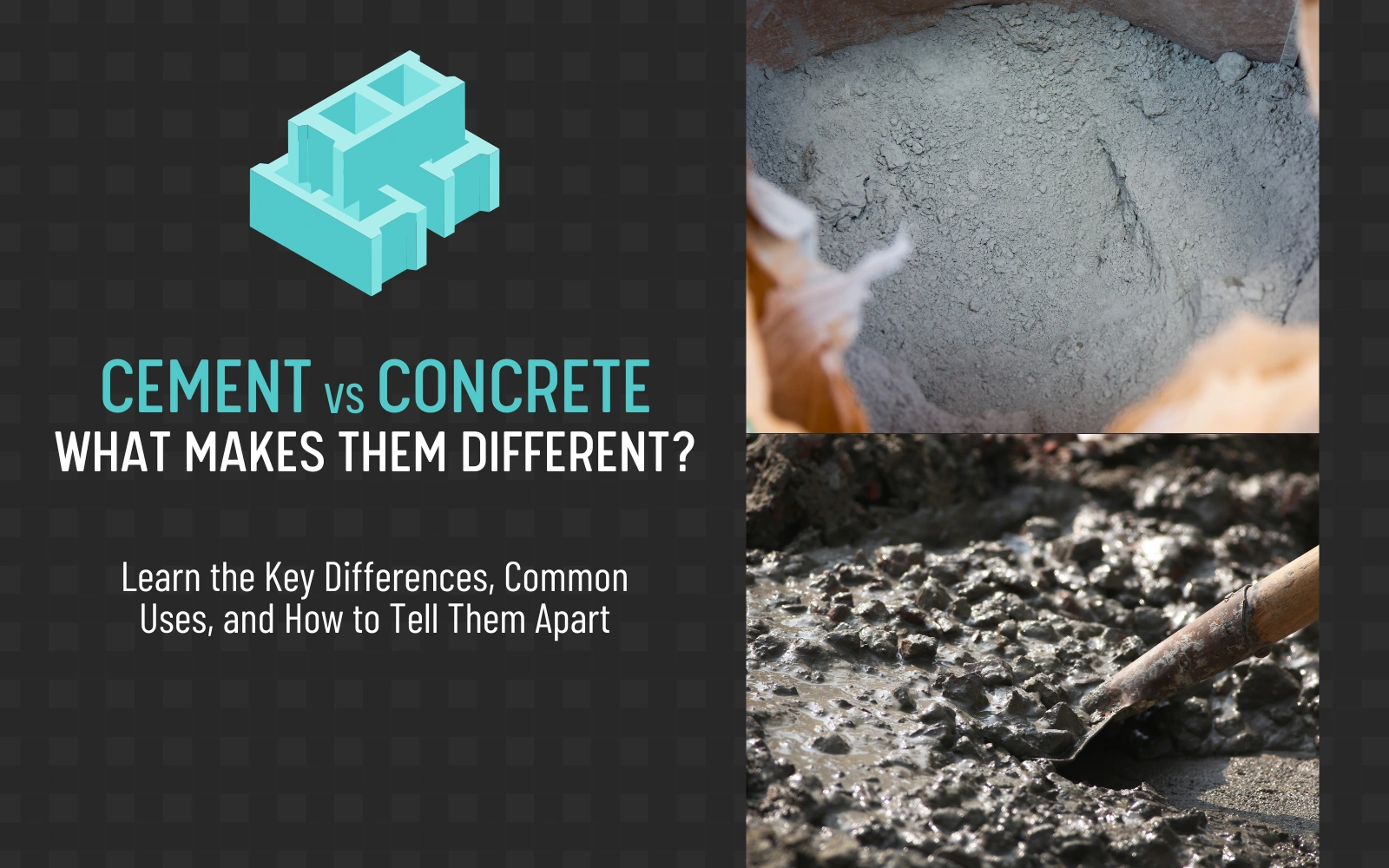
Most people use the words cement and concrete like they’re the same thing, without realizing there’s a meaningful difference.
It’s a common mistake, but using the correct term matters more than you’d think. Especially if you’re ordering materials, talking to a contractor, or working on a project yourself.
Getting it wrong can lead to incorrect orders, confusing conversations, or worse, using the wrong product altogether.
Here’s the main difference between the two:
Cement is just one ingredient in a concrete mix. It’s the binder that holds everything together. Concrete, on the other hand, is the finished product. It’s the stuff you pour, walk on, and build with.
You can’t have concrete without cement, but cement on its own isn’t strong enough to hold much of anything.
This guide will break down what goes into each one, how they’re used, and what they cost, so you can use the correct term with confidence, whether you’re on a job site or planning a project at home.
Let’s get into it.
Table of Contents
ToggleWhat's the Difference Between Cement vs. Concrete
| Feature | Cement | Concrete |
| Role | An ingredient used in concrete | The final building material |
| Form | Fine, dry powder | Wet mixture that hardens into a solid mass |
| Composition | Made from clinker, limestone, fly ash, and iron ore | Made from cement, sand, gravel/stone, and water |
| Chemical Reaction | Reacts with water to bind (hydration) | Hydration plus curing forms a strong, unified material |
| Common Uses | Mortar, grout, stucco | Sidewalks, foundations, driveways, patios, and buildings |
| Durability | Not structurally strong on its own | One of the most durable construction materials available |
What is Cement?
Cement is a fine gray powder made by heating a specific mix of raw materials at extremely high temperatures. On its own, it doesn’t do much structurally. But once it’s combined with water, sand, and gravel, it becomes the glue that holds concrete together.

What is Cement Made Of?
Cement is made from a mix of natural materials that are carefully combined to provide consistency in the final product. Most commonly:
- Limestone
- Clay or Shale
- Silica
- Iron ore
- Shells or other calcium-rich materials
- Occasionally, fly ash (a byproduct of coal combustion)
The exact mix might be different depending on how the cement will be used, but these ingredients are responsible for the chemical reactions that make cement work.
How Cement is Made
- The cement production process begins by crushing and blending the raw materials like limestone and iron ore.
- The mixture is fed into a cement kiln and heated to around 2,700°F (1,480°C) to break down carbonates.
- At this temperature, the materials break down and chemically transform, producing clinker (hard nodules about the size of marbles).
- Once cooled, those lumps of clinker are ground into a fine powder, becoming what we know as cement.
Hydration Process
The moment water hits cement, a natural chemical reaction kicks in. This is called the hydration process, and it’s what allows cement to harden and bind to other materials.
During this reaction, a compound called calcium-silicate-hydrate (CSH) forms. This is the substance that holds the concrete together and gives it its compressive strength.
While this reaction starts with cement alone, it plays a much bigger role once the cement becomes part of a concrete mix.
Different Varieties of Cement
There are several types of cement, each designed for specific uses:
Portland Cement
This is the standard cement used in most concrete mixes. It’s strong, durable, and works well for just about any building project (foundations, driveways, sidewalks, high-rise buildings, you name it). If you’re buying a bag of cement at the hardware store, it’s probably Portland.
White Cement
White cement is basically Portland cement but with lower levels of iron and manganese, which gives it a bright, clean appearance. It’s mostly used for architectural finishes, like decorative panels, polished floors, or surfaces where appearance matters. Structurally, it works the same as regular Portland.
Masonry Cement
Masonry cement contains Portland cement mixed with limestone and additives that improve workability and adhesion. It’s formulated specifically for mortar and stucco.
It’s not used in concrete but is excellent for bonding brick, block, and stone in both structural and decorative masonry work. It’s smoother, more flexible, and best for vertical surfaces or detailed work.
Rapid-Setting Cement
As the name suggests, this type is designed to set and gain strength quickly. This is mostly used in projects where time is limited, like emergency road repairs, fast-track construction, or in the winter when standard mixes take too long to set. It gains strength quickly, but you have to move fast when working with it.
Type V Cement
This is a sulfate-resistant cement made for environments where sulfates can damage concrete over time. It’s mainly used in coastal areas, wastewater facilities, or in soils with a high salt content.
Sulfates react with a compound in most cement called tricalcium aluminate (C₃A). This reaction creates pressure inside the concrete, leading to cracks and long-term damage. Type V cement is made with very low C₃A levels, which makes it much more resistant to this kind of chemical attack.
You’ll find Type V cement used in:
- Wastewater plants
- Marine structures
- Foundations in sulfate-rich soils
- Agricultural or industrial zones
Uses of Cement Alone
Cement on its own isn’t strong enough to support weight or handle structural loads—that’s why it’s almost always used as part of a concrete mix, not as a standalone material.
However, there are a few applications where cement is used without gravel or large aggregates, like it would be in concrete. In these cases, it’s usually mixed with just sand or water to create a paste for finishing or sticking things together. Common examples include:
- Mortar: A mix of cement and sand, used to hold bricks, blocks, or stones in place
- Grout: A mix of cement and water, used to fill joints or seal gaps
- Stucco: A decorative wall coating made from cement, lime, and sand
In each of these, cement works as a binder, helping the other materials hold shape or stick together, but it still needs that support from sand, lime, or water to be effective.

What is Concrete?
Concrete is the surface we walk on, the foundation our homes sit on, and the structure holding up bridges, highways, skyscrapers, and more.
It’s one of the most widely used construction materials in the world because of its availability, strength, and dependability.
What is Concrete Made Of?
Concrete is made by combining a specific blend of materials, each with its own purpose:
- Cement: Acts as the binder; it’s what holds everything together once water is added
- Sand: Also known as fine aggregate, it fills the spaces between larger particles and helps with smooth finishing
- Gravel or crushed stone: Called coarse aggregate, it adds bulk and strength to the mix
- Water: Triggers the hydration process, causing the cement to chemically react and form a hardened binder that locks everything together. This process is what allows concrete to transition from a wet mix into a solid, durable structure.

Concrete Mix Design and Strength
The exact concrete mix used has a major impact on how the concrete performs. The ratio of cement to water, along with the combination of sand, aggregate, and any additives, determines both the workability of the wet mix and the strength of the finished product.
Getting that balance right depends heavily on the hydration process (the chemical reaction between cement and water). And hydration only works if the water-cement ratio is right.
Water-Cement Ratio
Too much water makes concrete easier to handle, but it weakens the final structure by creating internal gaps (voids). Too little water, on the other hand, prevents full hydration, which can leave the mix stiff and hard to work with.
So how do you know if you’re using the right amount?
In most cases, the best water-to-cement ratio will depend on the application. However, a common range is anywhere from 0.4 to 0.6 by weight, meaning for every 100 pounds of cement, you’d use 40 to 60 pounds of water.
A lower ratio (closer to 0.4) gives you stronger concrete, while a higher ratio (closer to 0.6) improves workability and makes the mix easier to pour and finish.
Generally, if the mix holds its shape, isn’t soupy, and doesn’t dry out too fast while you’re working with it, you’re probably right where you need to be.
When the ratio is correctly balanced, hydration occurs as it should, producing a dense, durable final product that can withstand thousands of pounds of pressure per square inch.
Concrete Mixture Variations
Concrete can also include admixtures. These are optional additives that modify how the concrete mix behaves.
They can do everything from improve workability, control the setting time, and increase resistance to freezing, moisture, or chemicals, making it more durable in specific situations.
- Plasticizers (water reducers): Improve workability without the need for extra water. This makes the concrete easier to pour and shape while still producing a stronger final product.
- Air entrainers: Introduce tiny air bubbles into the mix to improve freeze-thaw resistance, especially in cold climates. These bubbles give freezing water space to expand, which helps prevent cracking.
- Retarders: Slow down the setting time of concrete. Useful in hot weather or large pours where more working time is needed before the mix begins to harden.
- Accelerators: Do the opposite—speed up the setting and curing process. They’re used when fast turnaround is needed, like in cold weather or rapid repair jobs.
These admixtures are typically selected based on the load requirements, exposure conditions, or finishing goals of the project. For example, concrete for a freeze-thaw driveway may include an air entrainer, while an interior slab won’t need one at all.
Concrete Specifications
Once concrete is mixed, its performance is measured by a few factors. These specifications help determine if the concrete will meet the demands of the structural work being done at a particular job and building to code. The most important concrete specifications include:
- Compressive Strength: This tells you how much pressure the concrete can handle before it cracks, measured in PSI (pounds per square inch). For most home projects, like setting fence posts, pouring a patio, or building a walkway, concrete in the 3,000 to 4,000 PSI range is more than enough. Heavier-duty projects, like garage slabs or load-bearing footings, may need something closer to 4,500 or 5,000 PSI.
- Curing Time: Concrete doesn’t reach full strength overnight. It gradually hardens over time, usually reaching its rated strength in about 28 days. Conditions like temperature, humidity, and any additives (like accelerators or retarders) can speed things up or slow them down.
- Mix Design: This is the specific blend of cement, water, sand, aggregate, and admixtures used for your project. It’s tailored to the job and adjusted for specific goals like freeze resistance, load capacity, or finish quality.
Whether you’re pouring a driveway, laying a foundation, or patching a patio, getting the mix right and giving concrete enough time to cure properly will prevent cracking and premature wear.
Common Comparisons (FAQs)
A lot of terms get tossed around when people talk about cement and concrete, especially when you’re shopping for materials or asking questions at the hardware store.
Here are some of the most common comparisons and how to tell them apart:
Concrete Mix vs. Cement Mix
- Concrete mix: This is the complete blend: cement (the binder), sand (fine aggregate), gravel or crushed stone (coarse aggregate), and sometimes admixtures like plasticizers or air entrainers. It’s designed to be poured into forms and used for structural applications—like footings, walkways, slabs, and post setting.
- Cement mix: This usually refers to a basic blend of cement and sand (for mortar) or cement and water (for grout). It’s used for binding materials, filling joints, or patching—not load-bearing construction.
If you’re setting fence posts, you’ll be using a concrete mix. If you’re laying bricks, it’s likely a cement-based mortar.
Concrete Block vs. Cement Block
- Concrete blocks (CMUs – concrete masonry units): These are large, heavy blocks made with a mix of cement, sand, and gravel. They’re used in structural walls, basements, retaining walls, and foundations.
- Cement blocks: These are typically lighter, less dense, and made with fewer aggregates. They’re used in decorative walls, garden edging, or partition walls that don’t need to carry much load.
If it’s going to hold up a house or garage wall, you want concrete blocks. If it’s a decorative planter or partition, a cement block may be fine.
Cement Floor vs. Concrete Floor
There’s no such thing as a cement floor. Cement is probably part of the mix, but if you’re walking on it, driving on it, or building over it, it’s a concrete floor.
Asphalt Concrete vs. Cement Concrete
- Asphalt concrete (used in most roads and driveways): Uses bitumen as the binder. It’s flexible, black, and better for surfaces that expand and contract. This is most commonly used for roads and driveways.
- Cement concrete: Uses Portland cement as the binder, making it rigid and far stronger in compression. It lasts longer but is more prone to cracking without control joints or proper subgrade prep. It’s mostly used for sidewalks, curbs, and building foundations.
Concrete vs. Cement Cost
- Cement costs more per pound because it’s a refined material made through high-energy processing. It’s a specialty ingredient, not used in bulk by itself.
- Concrete costs more per cubic yard or per bag because it includes all the materials, labor, and delivery. Ready-mix concrete from a truck is priced per cubic yard; bagged mixes are priced per weight.
By now, the difference between cement and concrete should be much clearer:
- Cement is an ingredient.
- Concrete is the finished product.
Both are essential to the construction process, but they’re not interchangeable.
Cement starts as a fine powder and undergoes a chemical reaction with water (called hydration) that allows it to bind with sand and gravel in a concrete mix. That reaction is what gives concrete its strength and durability.
If you’re explaining it to someone else, think of cement as flour and concrete as bread. You wouldn’t call a loaf of bread “flour,” and the same goes for a sidewalk or patio. It’s made of concrete, not cement.
Understanding the difference helps you:
- Use the correct term (no more “cement truck” when it’s actually a concrete truck)
- Choose the right product for your project
- Avoid confusion at the hardware store or on the job site
Do You Live in Wake County, NC?
Find a concrete company that will come out and tell you exactly what you need for your next home project.
Search
Do you own a local business in Wake County?
List your business on our directory today and connect with more local customers!
Recent Posts
Search the Raleigh Business Directory
Search